
Digital Marketing for Small Business: The Essential Guide
Half of every small business digital marketing strategy never makes it off the drawing board. Not because the plan was wrong, but because the owner ran out of hours in the day. You can have the best keyword research, the sharpest content calendar, and a perfectly optimized website audit sitting in your inbox, and none of it matters if nobody clicks "publish."
That gap between strategy and execution is the single biggest reason small businesses stall online. This guide cuts through the noise and focuses on what actually moves the needle: the right channels in the right order, a realistic timeline, and an honest look at where most owners get stuck.

What Digital Marketing Actually Looks Like for a Small Business
Forget the textbook definitions. For a small business, digital marketing boils down to getting found online by people who are ready to buy what you sell. That means showing up in Google search results, appearing on Google Maps, maintaining an active social presence, and converting visitors into leads once they land on your site.
The challenge is that most guides treat these channels as independent projects. They're not. Your Google Business Profile feeds your local SEO. Your blog posts build the authority that lifts your rankings. Your social media keeps you top-of-mind between searches. Everything connects, and the businesses that grow fastest treat digital marketing as one integrated system rather than a checklist of disconnected tasks.
Why Channel Order Matters More Than Channel Count
With limited time and budget, you can't do everything at once. The most effective sequence for most local businesses starts with your Google Business Profile and basic on-page SEO, then expands into content marketing and social media. Paid ads come last, once you know which keywords actually convert.
A local plumber, for example, gets more immediate value from a fully optimized Business Profile with fresh reviews than from an Instagram account. A boutique retailer, on the other hand, might lean heavier on social earlier because their product is visual. The principle stays the same: start where your customers are already searching.
The Channels That Earn Their Keep on a Small Budget
Google Business Profile is the single highest-ROI activity for any business that serves a local area. Completing every field, uploading current photos, posting weekly updates, responding to reviews, and adding your services with descriptions takes your profile from invisible to competitive. Most competitors leave their profiles half-finished, so the bar is lower than you think.
SEO and Content: The Compounding Engine
Search engine optimization isn't a one-time fix. It requires consistent effort over six to twelve months. That means publishing keyword-focused blog posts, tightening your on-page elements, building internal links, and earning citations. If you want a deeper look at how local visibility works alongside organic search, the principles in this local SEO growth guide break down the mechanics clearly.
Content marketing supports your SEO by giving Google more pages to rank and more signals that you're an authority. A dental practice publishing posts about common procedures, insurance questions, and aftercare builds topical relevance that a competitor with a five-page brochure site simply can't match.
Social Media and Email: Staying Top of Mind
Social media works best for small businesses as a trust-building and retention channel, not a primary lead generator. Share your GBP posts, highlight customer stories, and show the human side of your business. Email rounds out the picture by nurturing leads who aren't ready to buy yet.
Skip paid advertising until you've nailed the organic fundamentals. Running ads to a slow website with no clear call to action burns money fast.
The Execution Gap Nobody Talks About
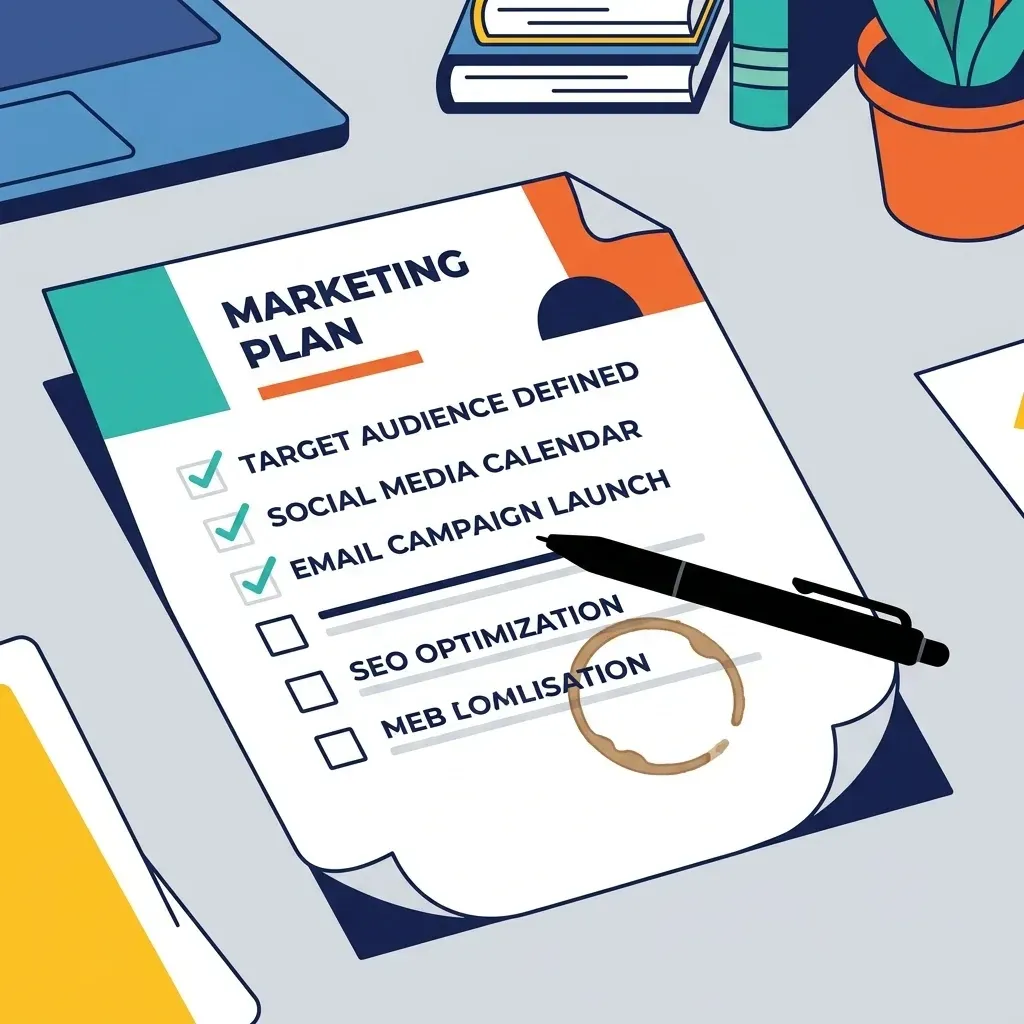
Here's the uncomfortable truth. You can hand a small business owner a complete digital marketing roadmap, and there's a coin-flip chance it collects dust.
The SBE Council's technology survey found that 23% of small businesses cite limited knowledge or training as the biggest barrier to technology adoption. But knowledge isn't even the main bottleneck for most owners who already have a plan. Bandwidth is. When you're quoting jobs, managing staff, and handling customer issues, writing a blog post or optimizing your Business Profile slides to the bottom of the list every single week.
This pattern shows up constantly. A business gets website updates for improved SEO, a batch of recommended GBP posts, a social content outline, and a full content calendar with six to twelve months of keyword-targeted articles. Half of them never implement the entire strategy. The posts don't get published. The profile updates stall. The authority that would have compounded over months never materializes.

What Incomplete Execution Costs You
A half-executed strategy doesn't produce half the results. It produces almost none. SEO authority builds through consistency. If you publish three posts and stop for two months, Google doesn't reward you for good intentions. Your competitors who kept posting pass you, and those three articles sit on page four where nobody looks.
The real cost is opportunity. Every month without fresh content and an active Business Profile is a month your competitors gain ground. Understanding how modern SEO actually works in practice makes it clear that consistency isn't optional.
A Realistic 90-Day Plan That Respects Your Time
Days 1 through 30 should focus entirely on your foundation. Claim and fully optimize your Google Business Profile. Fix any technical SEO issues on your website. Set up Google Analytics and Search Console so you can actually measure what's working. Identify your top ten target keywords.
Days 31 through 60, start publishing. Two keyword-focused blog posts per month is a realistic minimum. Begin posting to your GBP weekly. Ask your three happiest customers for Google reviews. These activities take roughly four to six hours per week.
Days 61 through 90, review your Search Console data and double down on keywords gaining traction. Add social media sharing of your published content. Build out your email list with a simple lead magnet on your site. By now you should see early ranking movement and increased profile visibility.
That's a reasonable plan. The question is whether you have those four to six weekly hours to spare.
How do I choose the right KPIs to track in small business digital marketing?
Pick KPIs that map to revenue, not vanity metrics. For most small businesses, prioritize conversion rate, lead volume and quality, calls or form submissions, and cost per lead, then review trends monthly to spot what is improving.
What should a small business website include before investing time in content or promotion?
Your site should have a clear primary call to action, fast mobile performance, and service or product pages that match what customers search for. Add trust signals like reviews, guarantees, and simple contact options so traffic has an obvious next step.
How can I repurpose one blog post into multiple marketing assets without extra writing time?
Turn the post into a short checklist for email, two to three social captions, and one simple FAQ snippet for your service pages. Reusing the same core ideas in different formats saves time while reinforcing the same message across channels.
How do I get more customer reviews without sounding pushy?
Make the request part of your normal process, ask right after a positive outcome, and provide a direct link to the review form. Keep the message short, specific, and focused on making it easy for the customer to share their experience.
What is a realistic budget for paid ads once a small business is ready to test them?
Start small with a controlled test budget you can sustain for at least 90 days, then scale only after you see consistent cost per lead and conversion performance. The goal is learning and repeatability, not instant profitability on day one.
How do I decide whether to hire an agency, a freelancer, or keep marketing in-house?
Choose in-house when you have time and a repeatable process, choose a freelancer for a narrow task, and choose an agency when you need a coordinated system with accountability. The right option depends on how much strategy, execution, and reporting support you need.
How long does it take to see meaningful results from local digital marketing efforts?
Many businesses see early improvements in visibility and inquiries within weeks when listings and conversion paths are tightened, while stronger momentum typically takes multiple months of consistent activity. Set expectations around steady progress, not overnight transformation.
Close the Gap Between Strategy and Results
Digital marketing for small businesses isn't complicated in theory. Show up in search, build trust, convert visitors. The hard part is showing up consistently when you're already stretched thin. If your strategy is solid but your execution keeps stalling, that's not a knowledge problem. That's a bandwidth problem, and it has a straightforward solution.
Stop letting good plans collect dust. Reach out to Throttle Digital and let a dedicated team handle the execution while you focus on running your business.
Recent Posts